Your Child Ignores the To-Do List You Made — Is It Really Just Laziness?
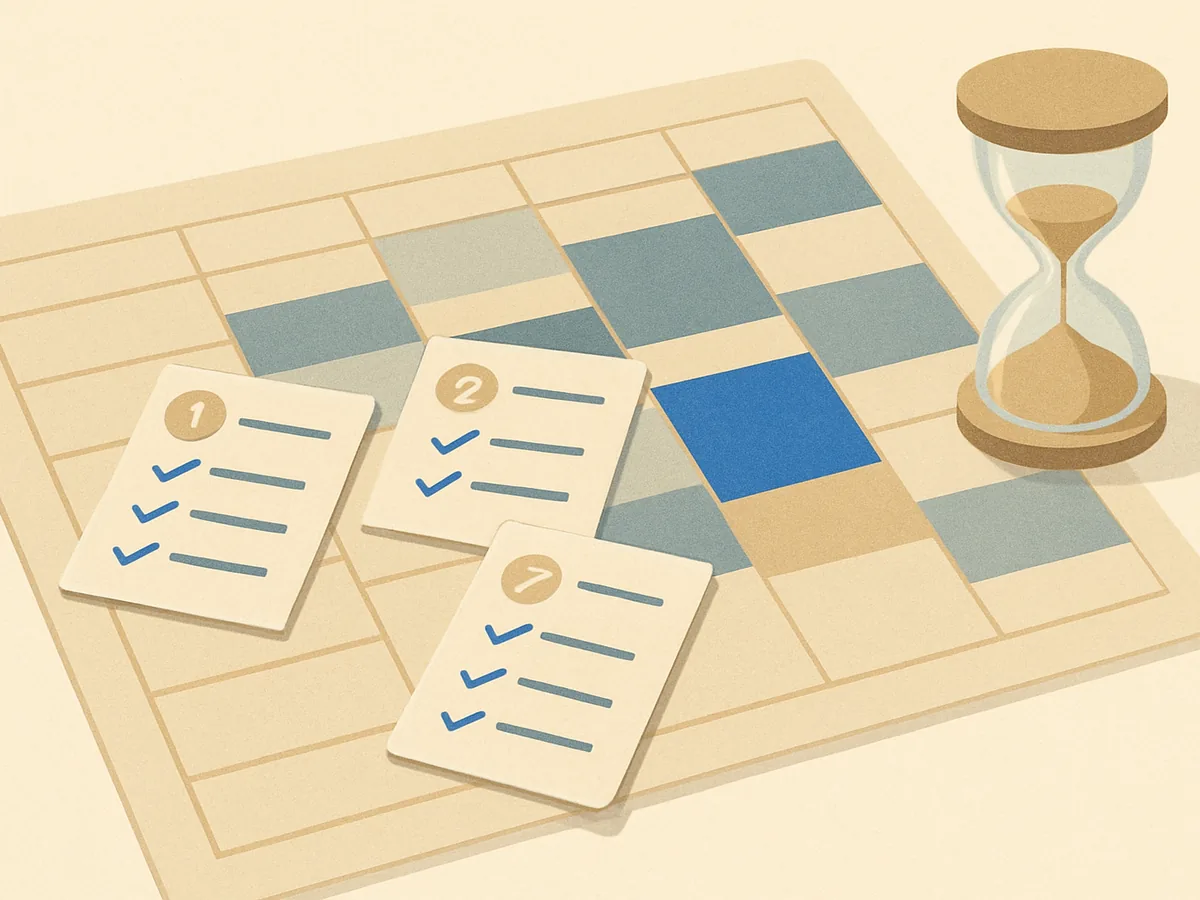
Have you ever noticed that the to-do list you taped to your child's desk over the break has quietly become part of the wallpaper — seen, but never really read? You write out a careful "today's tasks" list each morning, hand it over, and by afternoon barely half of it has been touched. Items like "homework," "math practice," or "reading" look like helpful guidance at first glance, but from a child's point of view, they can feel like vague instructions with no clear finish line.
Right around the start of a new term, many families pull out a fresh to-do list to rebuild the rhythm that slipped during the break. But when a child still doesn't follow it, parents often jump straight to worrying — "Does she just not care?" or "Is he being lazy?" In many cases, though, the real issue isn't the child's willingness at all. It's how the list itself was built.
This post looks at why upper-elementary children often don't stick to their to-do lists, and how you can rewrite one today to make it actually work.
Why This Happens
The most common reason a to-do list falls apart is that the items are too broad. Writing "do homework" or "study math" gives a child no clear sense of when to start or when it counts as done. Any task without a visible starting and ending point tends to get put off — even adults do this.
The second reason is a lack of priority. When every item on the list carries the same visual weight, a child has to stop and figure out what to do first, and that hesitation eats up time. Third, vague scope is a problem on its own. "Do the workbook" could mean one problem or ten — on paper, both look identical as "done." Without a clear boundary, a child can't feel a real sense of completion, and without that sense of completion, there's little momentum to move on to the next item.
These three issues show up differently depending on a child's learning style. A child who takes in information very concretely may simply avoid starting at all if the scope isn't spelled out, while a child who thinks in big-picture terms may feel overwhelmed by a long list of granular items. Either way, there's often a gap between what a parent assumes — "I made the list, so it should just work" — and what the child actually needs from that list.
A Different Approach for Each Learning Style
Principled (Sensing × Sequential)
This type feels most secure when the order and amount of work are spelled out clearly. Instead of "study math," writing "complete 30 pages in the math workbook" tends to noticeably raise follow-through. Simply pinning down exact page numbers or problem counts when you write the list together already helps a lot.
Goal-oriented (Sensing × Global)
This type cares about efficiency and priority, so a list with order but no sense of weight can feel frustrating. Numbering tasks by priority and marking the most important one with a star tends to fit well. Separating tasks into "do first," "handle right away," and "important but can wait" takes the guesswork out of ordering things for them.
Deep-focused (Intuitive × Sequential)
This type needs to understand why a task matters before they can really engage with it. For this child, spelling out a concrete scope — like a chapter name and problem range — works well. Something like "Math, Chapter 3, problems 1–15" gives a clear boundary they can dig into at their own pace.
Holistic (Intuitive × Global)
This type moves after seeing the big picture first, so rigid units like page counts can actually feel constraining. If plans keep falling short, try shifting away from fixed page numbers toward looser units — a concept group, a block of study time, or one workbook unit. For this child, "through this concept" tends to land better than "this many pages."
Three Things to Try Today
- Stop writing just "homework." Write time and activity together in one line — something like "7:00 PM: complete Chapter 2 of the language workbook." When both the when and the what are in the same sentence, your child is less likely to be confused about where to start.
- Add numbers and a star to set order. Number the items on the list and mark today's most important task with a star. Sorting tasks into "do first," "handle now," and "can take more time" cuts down on the time your child spends deciding what comes next.
- If the amount of work keeps slipping, change the unit. If a set page count goes unfinished for several days in a row, that number may simply not fit this child. Try swapping page counts for looser units — a concept group, a fixed block of study time, or one workbook unit — and observe for a few days.
Frequently Asked Questions
Q. I've made the list as specific as I can, and it still doesn't work. Isn't this just a willpower issue, regardless of learning style? A. Before concluding it's a willpower issue, it's worth checking whether each item on the list has a clear start and end point. "Do homework" and "complete pages 12–14 of the language workbook" feel very different to a child, even though they sound similar to an adult. That said, if a pattern of persistent low motivation or outright refusal to start continues over time, it may be worth consulting a professional to rule out other underlying causes.
Q. I'd like to understand my child's learning style accurately. Is observation alone enough? A. Watching how your child responds to different list formats is a good starting point, but it's better paired with a formal assessment rather than relied on alone. Learning style isn't about better or worse — it's about how a child takes in and processes information — so the more accurately you understand it, the easier it becomes to shape a list that actually fits.
Q. Our routine fell apart over the break, and we're just starting a new term. Is now a good time to redo the to-do list from scratch? A. Yes — this is a natural point to rebuild a rhythm that loosened up during time off. Rather than aiming for a perfect list right away, try applying just one of today's three suggestions and watch how your child responds over the next few days.
When a to-do list doesn't get followed, the problem is usually not your child's willingness — it's how the list was built. Writing time and activity together instead of vague phrases, marking priority with numbers and a star, and adjusting the unit of work when the amount keeps missing the mark can shift follow-through more than you'd expect. Pick just one line from today's list and try rewriting it this way.
Read the QuadStudy source material this post draws on (in Korean).
Take the learning-style assessment in the AI study coach 'TwinCoach' to get methods that fit your child.
Take the assessment in TwinCoach ↗QEduAll education portal ↗