Should You Still Review Wrong Answers Right Before a Test?
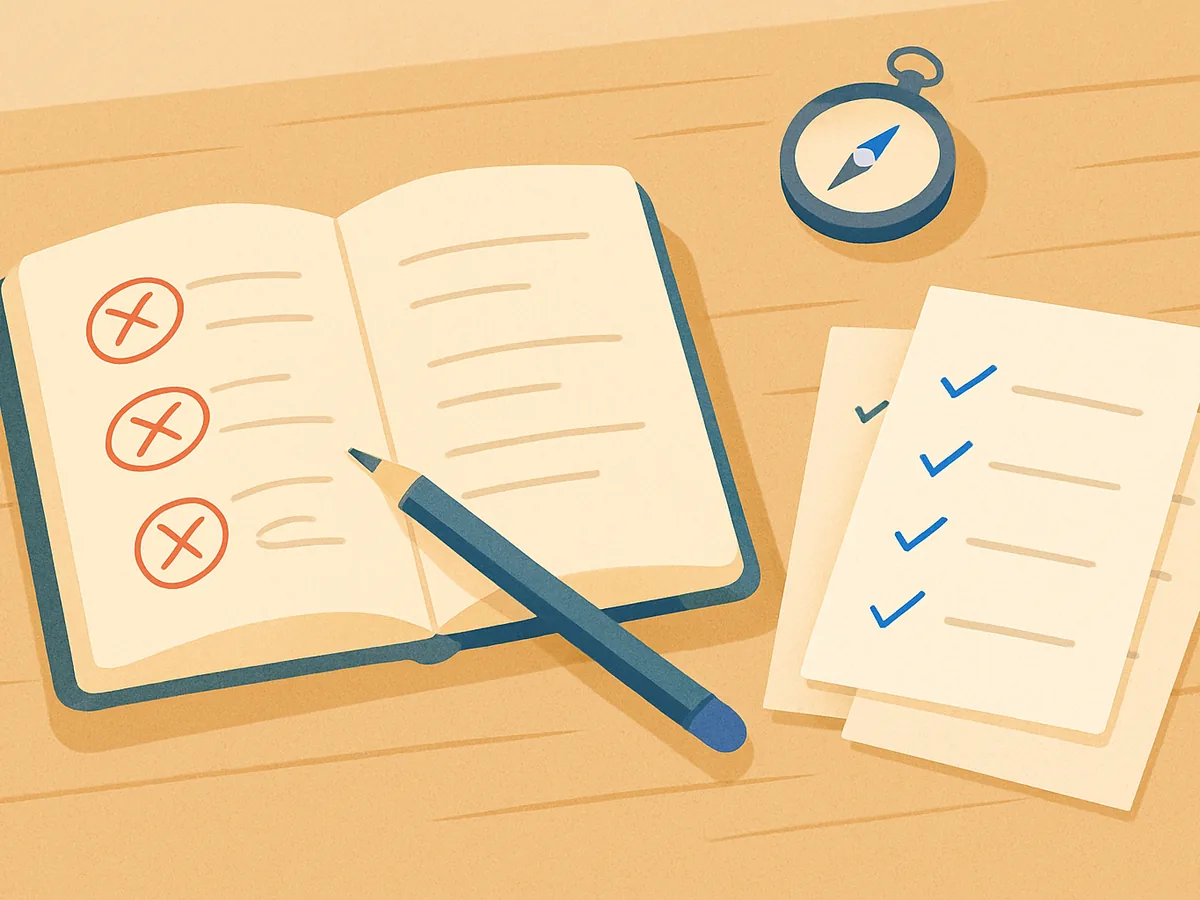
Your child is sitting at the desk, staring at last week's practice test again, and lets out a sigh before even picking up the pencil. "Why go over this again? We don't have time." As exam season ramps up and more students sit for practice tests, a lot of parents ask the same thing: is it really worth analyzing old mistakes this close to the real thing, or would it be better to just push through more new problems?
This question has come up a lot lately in test-prep content online, too, often framed around the most common mistake students make right before an exam. The short answer: reviewing why your child got something wrong matters more, not less, as the test date gets closer. But the way you do it should look different from your usual routine. This isn't the time to explore new question types broadly — it's the time to nail down, precisely, the one reason behind each mistake.
Why This Happens
When a test is close, everyone gets anxious — both kids and parents. Wanting to grind through more practice problems to feel reassured is a completely natural response. But in coaching sessions, when we look closely at kids who keep missing the same type of question, most of the time it isn't that they don't know the material — it's that they never stopped to check why they got it wrong, so the same mistake keeps repeating. Reviewing errors is really the last step of retrieval practice — the skill of pulling learned material back out accurately under real test pressure. Skip this step, and the gap between "knowing it" and "actually getting it right on the test" stays wide right up until exam day.
The more anxious a child is about testing, the bigger that gap feels. "What if I get it wrong again?" is usually a fear that comes from vagueness — not knowing exactly where or why mistakes happen. Once a child can name the specific point and reason behind a mistake, that anxiety turns into something concrete they can actually work on. The real point of reviewing errors right before a test isn't to squeeze out a few more correct answers — it's to help your child recognize their own mistake patterns going into the exam.
A Different Approach for Each Learning Style
Even though the goal is the same — understanding why an answer was wrong — the most effective method depends on how your child takes in and processes information. No one approach is better than another; the key is finding what actually fits your child.
Principled
This type feels most settled following a clear order and system. Organizing wrong or uncertain answers into an error log and reworking them fits well here. Physically writing out the correction for each wrong choice and comparing it against the answer explanation, step by step, also works especially well for this type. Right before the test, there's no need to start a new error log — simply reviewing the existing one in order is enough.
Goal-oriented
This type naturally maps out the whole structure first and looks for the most efficient path. For paired-statement or combination-style questions, working out all the possible pairings first, then eliminating pairs that can't both be true (or both be false) to narrow down the answer logically, suits this type well. Breaking each answer choice into individual clauses and re-checking the meaning of key terms to mark true/false also plays to this type's preference for efficiency.
Deep-focused
This type does their best work digging into why an answer is correct at its root. Cross-checking each answer choice directly against the evidence in the passage or source material fits especially well here. Marking your own reasoning in pencil and the official explanation's reasoning in a different color, then comparing the two side by side, also works well for a type that wants to verify the logic themselves. If the test is close, it's worth leaving even a short window for the child to find the evidence on their own rather than leaning entirely on review lectures.
Holistic
This type naturally looks at the overall context and flow before anything else. Flagging uncertain questions and coming back to them later if time allows suits this type well. For reading comprehension questions, first suspecting any answer choice that seems to clash with the passage's overall theme or tone — before checking details — comes naturally to a type that draws the big picture first.
3 Things to Try Today
- Pick just 3–5 wrong answers, log them, and rework them. Right before a test, accuracy matters more than volume — pulling out only the recent mistakes or uncertain answers from a practice test and reworking those is enough.
- Have your child say out loud why they chose an answer — not just guess. Practicing explicit reasoning out loud, naming the specific wording or evidence behind a choice, builds the kind of steadiness that holds up under real exam pressure.
- Even for correct answers, read every remaining choice all the way through. After finding the right answer, reading through all the other choices to check any unfamiliar terms helps prevent falling into a similar trap next time.
Frequently Asked Questions
Q. Should we still review mistakes the night before the test? A. The night before isn't the time to build a new error log — it's better spent lightly reviewing what's already been organized. Rushing to learn a new question type at the last minute tends to raise anxiety rather than help.
Q. What if my child doesn't like keeping an error log? A. An error log is just one method, not the only one. Marking and comparing evidence directly in the passage, or breaking down answer choices piece by piece, can achieve the same goal in a way that better fits your child's style.
Reviewing mistakes right before a test isn't about squeezing in more practice problems — it's about helping your child walk into the exam room knowing one or two of their own mistake patterns clearly. Before opening a new workbook today, consider sitting down with your child and briefly talking through why they got a few recent questions wrong.
Read the QuadStudy source material this post draws on (in Korean).
Take the learning-style assessment in the AI study coach 'TwinCoach' to get methods that fit your child.
Take the assessment in TwinCoach ↗QEduAll education portal ↗