Why Doesn't Your Child's Grades Improve Even With a Study Plan?
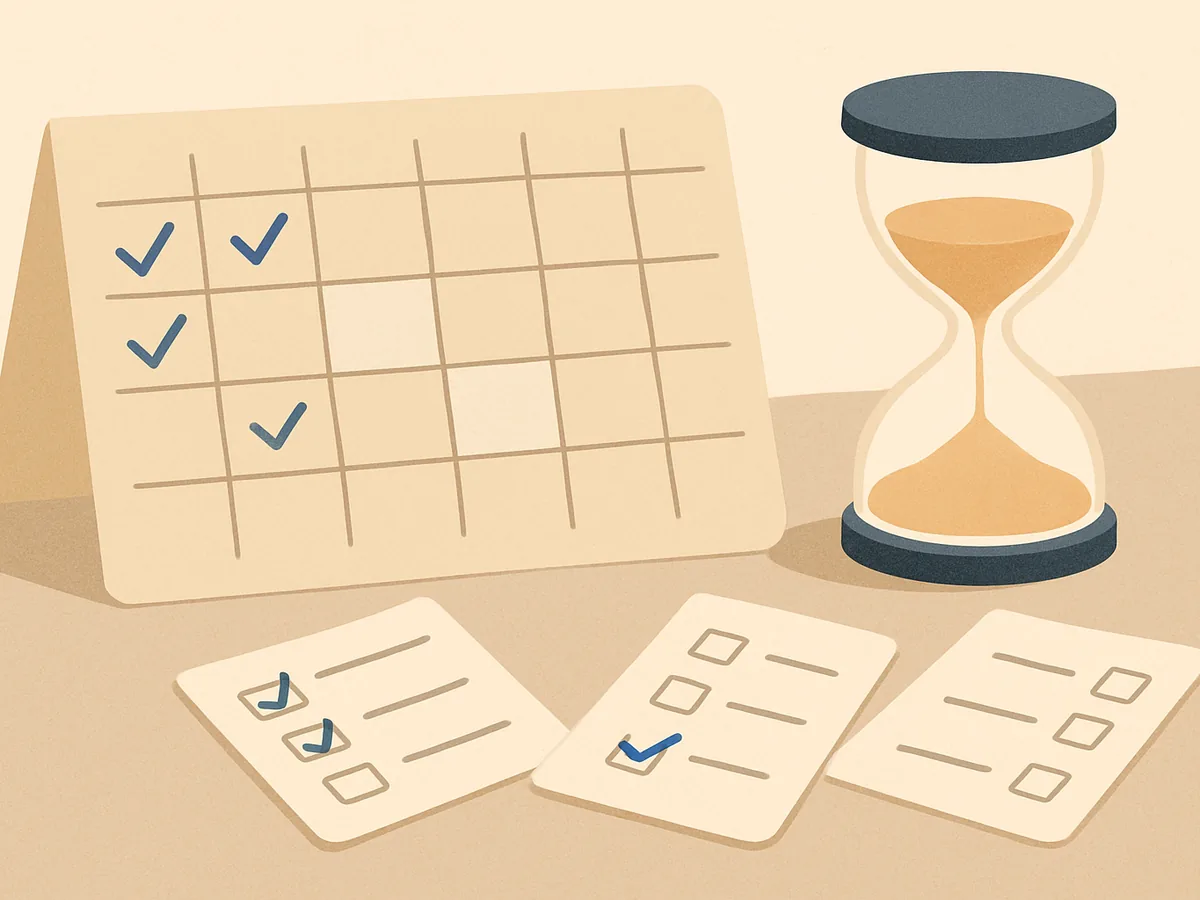
As the school break winds down, the colorful planner is still taped above the desk. Monday says "Math Chapter 3," Tuesday says "50 vocabulary words," all neatly written out. But when the report card comes home, it looks a lot like last term's. Both the child and the parent feel a little cheated. There was a plan. So why didn't it turn into results?
This question comes up most often from parents of 8th and 9th graders. This is the age when kids start building their own study plans, and also when the number of subjects and the scope of each exam grows enough that a plan's real effectiveness becomes obvious fast. Today we'll walk through why a plan can exist without moving the needle, and what to do differently depending on your child's learning style.
Why This Happens
Building a plan and finishing a plan are entirely different skills. Many students pour all their energy into the moment of writing the plan, and never look at it again afterward. Without a process to check whether something got done, didn't get done, or took longer than expected, the plan stays on paper and drifts further and further from what actually happens at the desk.
There's a pattern that shows up again and again in coaching sessions. Planners belonging to students whose grades have stalled tend to have marks only for the first few days, then blank pages after that. Students whose plans actually work, on the other hand, have planners full of checkmarks, circles, and arrows — messy, but alive. In other words, it's often not the quality of the plan that changes grades, but the daily habit of coming back to it.
A Different Approach for Each Style
Principled
Because structure and sequence matter to this child, the act of building a plan is probably already a strength. The gap tends to show up when nobody checks the difference between the time a task was expected to take and the time it actually took. At the end of the day, have your child write the expected time and the actual time side by side, then adjust the next day's workload or time blocks by that difference.
Goal-oriented
Because efficiency and priority come first for this child, they're probably already sorting tasks into "important" and "less important" in their head when they plan. The problem is when that priority never becomes visible on the page. Try marking urgent or important items with a star or highlighter, so that on a tight day, it's immediately clear what to tackle first.
Deep-focused
Because this child won't move quickly through material until the underlying logic makes sense, unfinished items piling up on the planner can become a real psychological weight. Start by asking your child directly: does carrying an unfinished task over to tomorrow feel motivating, or does it feel like a burden? If it's a burden, it's usually better to run on a strict "today's work stays in today" rule, with no carryover.
Holistic
Because this child tends to sketch the big picture first and adjust details as they go, a fixed, rigid planner often works against them. What fits better is a plan that's easy to see often and easy to revise. Post it somewhere your child passes by constantly — the desk, the door — rather than tucked in a drawer, so it can be rewritten the moment circumstances shift.
Three Things to Try Today
- Make marking "done" a habit. Whatever method your child prefers — a checkmark, coloring it in, a circle — make sure every finished item gets marked. A planner with no marks gives you no way to tell what actually happened.
- Set a clear rule for unfinished items. Use different symbols (circle, X, triangle, arrow) to record the status of what didn't get done. Whether to carry it forward or close it out same-day should depend on whether carrying tasks over feels motivating or discouraging to your child — ask them.
- Keep the planner somewhere visible. A sticky note or printed planner on the desk or door gets glanced at and adjusted naturally, several times a day. A plan loses its power the moment it goes into a drawer.
Frequently Asked Questions
Q. Should we rewrite the planner from scratch every day? A. What matters more than starting fresh is marking what's done and undone on the existing planner and adjusting from there. Whether it's a calendar format or a simple notepad, a planner that accumulates visible traces tends to last longer than one that keeps getting replaced.
Q. My child is hard on themselves for not sticking to the plan. What should we do? A. If carrying tasks forward feels like a burden to your child, try switching to a same-day-only system with no carryover. If the self-blame keeps repeating, your child may start avoiding planning altogether — so adjust the system first before asking for more discipline.
Q. How can we know our child's learning style for certain? A. The approaches in this article are meant as observation guides, not a diagnosis. For a more precise read on your child's learning style, a standardized learning style assessment (such as the ILS) is recommended.
A plan doesn't draw its power from the moment it's written, but from being checked and revised again, day after day. Rather than drawing up a brand-new planner today, try starting with something smaller: go mark one finished item on the plan you already have.
Read the QuadStudy source material this post draws on (in Korean).
Take the learning-style assessment in the AI study coach 'TwinCoach' to get methods that fit your child.
Take the assessment in TwinCoach ↗QEduAll education portal ↗