Why Your Child's Break-Time Study Schedule Always Falls Apart by Day Three
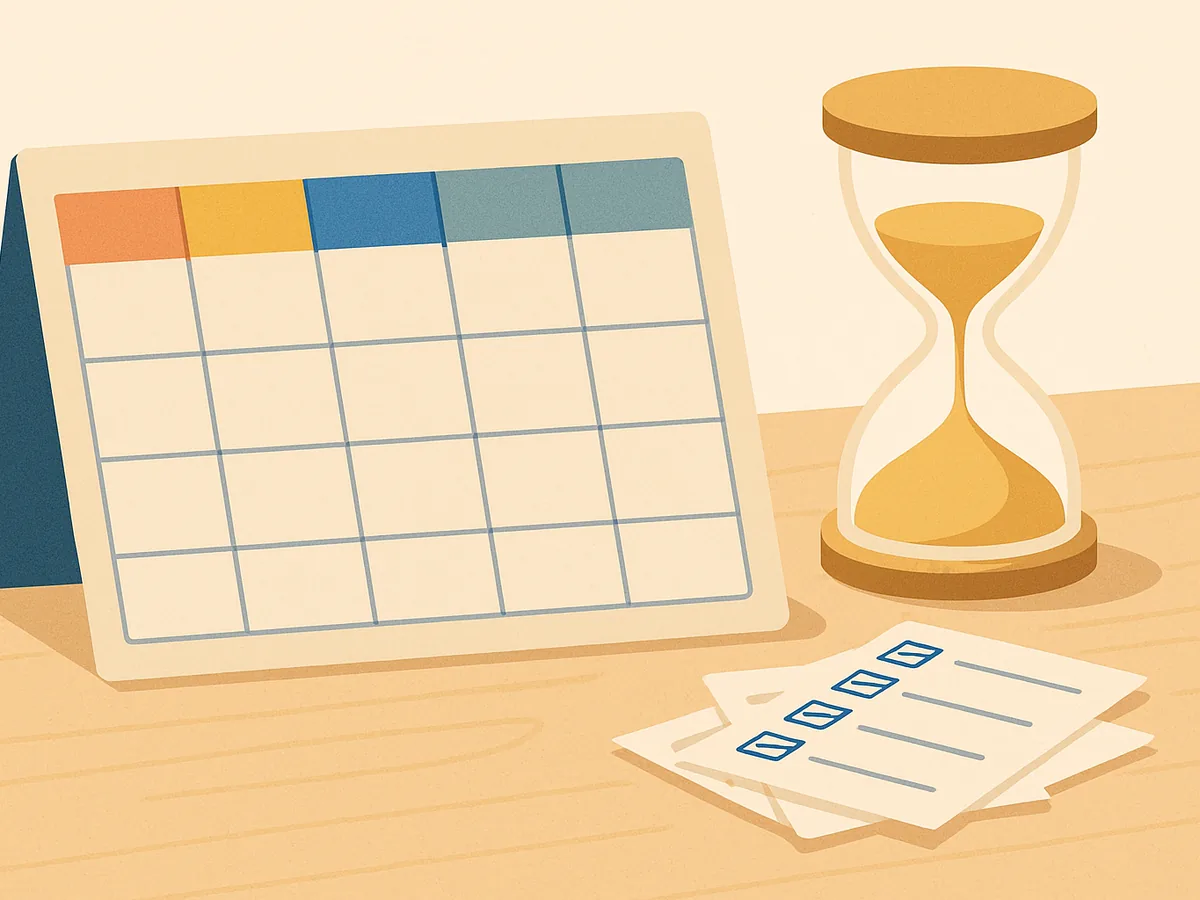
On the first day of school break, many parents sit down with colored pens and fill in a schedule like a work of art—wake-up time, study blocks, reading hour, all mapped out without a single blank space. It feels satisfying just to look at. Then about a week later, that schedule quietly disappears into a desk drawer, and both parent and child drift through the rest of the break with no plan at all.
This post answers two questions: why does a break-time study plan so often fall apart within days, and what should you actually do differently starting today?
Why This Keeps Happening
The most common reason a schedule collapses is that it's built too tightly, all at once, right from the start. A plan that fills every hour of the day down to the minute makes a single missed slot feel like the whole thing has failed—and that's usually the moment the entire plan gets abandoned.
Another issue is the absence of a real deadline. A goal like "finish one math workbook this break" sounds concrete, but without counting backward from the actual end date to figure out how much needs to happen today, it stays a vague intention rather than an actual plan.
Finally, there's often no way to track whether a task was actually completed. Without some visible mark of progress, a missed day simply vanishes, and the next day feels like starting from zero again—which quietly erodes trust in the schedule itself. This connects directly to how differently children plan and follow through depending on their learning style. The exact same schedule can feel reassuring to one child and stifling to another.
A Different Approach for Each Learning Style
Principled
Children with this style tend to like order and a clear system, so a calendar-style schedule generally suits them well. But if the time estimates keep missing the mark against what actually happens, they start to lose trust in the whole plan. It helps to compare planned study time against actual time spent, then adjust the following week's time blocks or workload accordingly.
Goal-oriented
These children need to see the overall structure and priorities before they can act—daily details alone won't motivate them. Start by marking fixed commitments and deadlines (school, hagwon—after-school academy—sessions, tests) on the calendar to establish the overall frame. Then stagger subject start times strategically: begin time-intensive subjects like math, English, and reading early in the break, and save memorization-heavy subjects for one to two weeks before school resumes.
Deep-focused
When a child with this style gets absorbed in something, plans often go sideways—and that's normal for them. Rather than mapping out detailed daily tasks far in advance, deciding what to do just a day or two ahead, and adjusting flexibly as needed, tends to build more consistency over time than a rigid long-term plan ever could.
Holistic
These children feel most comfortable when they can sense a continuous flow within the bigger picture. Marking completed tasks with a check or a color, and simply moving unfinished ones to the next day or the weekend, keeps a single off day from feeling like the whole plan has failed. It also helps to post the schedule somewhere highly visible—a bedroom door or above the desk—rather than tucking it away.
Three Things to Try Today
- Open a calendar-style planner and write in fixed commitments first—tests, hagwon intensive sessions, school events—marking them in a different color from open time. This shows you at a glance how much unscheduled time actually remains.
- Count backward from the last day of break. Start time-intensive subjects like math, English, and reading in the first week, and hold memorization-based subjects until one to two weeks before the break ends. Don't map out every daily detail up front—leave room to decide the specifics a day or two in advance.
- Mark each completed task daily with a check or color. When something isn't finished, don't erase it—move it to the next day's or weekend's slot instead. Keep the schedule posted somewhere visible, like a desk or door, rather than filed away in a drawer.
Frequently Asked Questions
Q. Should I plan out every hour in detail from the very beginning? A. Not necessarily. It works better to first establish the big picture—the final deadline and any fixed commitments—and then decide the day-to-day details just a day or two ahead, adjusting as things come up. This approach tends to suit children with a more Deep-focused style especially well.
Q. What should we do when a day's plan doesn't get done? A. Rather than treating it as a failure and redrawing the whole schedule, simply move the unfinished task to the next day or the weekend slot. If marking completed tasks is already a habit, this kind of adjustment feels much more natural.
Q. How can I tell which learning style my child has? A. Pay attention to whether your child tends to map out every detail in advance or prefers to start with just the big picture. That said, we'd recommend against labeling your child's style based on casual observation alone—a proper assessment (such as an ILS-based evaluation) offers a much more reliable read.
When a break-time schedule falls apart, it's rarely about your child's willpower—more often, it's simply that the planning approach didn't fit how they work. Counting backward from the deadline to set the big picture, marking progress visibly, and adjusting flexibly as you go can meaningfully extend how long a schedule actually lasts. Instead of drawing up something elaborate today, consider starting with just one thing: writing the final deadline on the calendar.
Read the QuadStudy source material this post draws on (in Korean).
Take the learning-style assessment in the AI study coach 'TwinCoach' to get methods that fit your child.
Take the assessment in TwinCoach ↗QEduAll education portal ↗